Akkermansia Muciniphila and Cancer Immunotherapy — What the Research Shows
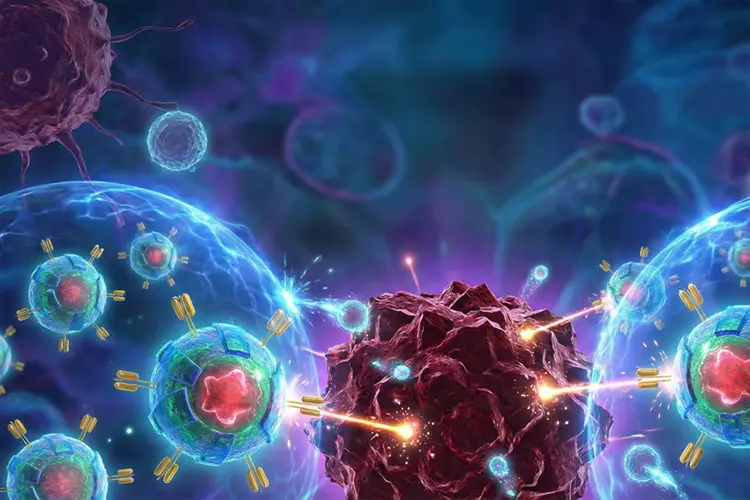
In 2018, a paper published in Science linked gut Akkermansia muciniphila levels to who responds to cancer immunotherapy — and who does not. Four years later, a larger prospective study in Nature Medicine confirmed and extended the finding in 338 lung cancer patients. This is one of the most significant microbiome findings in modern oncology, and one that hasn't yet changed clinical practice but is actively shaping the research agenda. This article explains what both studies found, what the mechanism is, what the research does not yet show, and what — if anything — it means in practical terms.
This article covers published research — it is not medical advice. The findings discussed here have not yet been incorporated into clinical treatment protocols. If you are currently undergoing cancer immunotherapy or considering it, please discuss any questions about diet, supplements, or the microbiome with your oncology team before making any changes. This is a rapidly developing area of research and your oncologist is the right person to interpret these findings in the context of your specific situation.
What Is PD-1 Immunotherapy?
Before covering the Akkermansia research, it helps to understand what PD-1 immunotherapy is and why only some patients respond to it.
PD-1 (programmed death-1) is a checkpoint receptor on the surface of T cells — the immune system's cancer-killing cells. Cancer cells can exploit PD-1 signalling to effectively switch off T cells that might otherwise attack them, allowing tumours to evade immune destruction. PD-1 checkpoint inhibitor drugs (such as pembrolizumab and nivolumab) block this switch, removing the brake on T cells and allowing the immune system to attack the tumour.
The problem is that this only works in a minority of patients. In non-small cell lung cancer (NSCLC), for example, only around 35% of patients experience long-term benefit from immunotherapy. Identifying who will respond before starting treatment — to avoid ineffective treatment and its side effects — is one of oncology's most active research challenges. PD-L1 expression (a protein on tumour cells) is currently the primary clinical biomarker used to predict response, but it is imprecise. Many PD-L1-positive patients still don't respond, and some PD-L1-negative patients do.
The 2018 Routy Study — The Landmark Finding
The connection between Akkermansia and immunotherapy emerged from research by Bertrand Routy and colleagues at the Gustave Roussy Cancer Campus in France, published in Science in January 2018.
The study examined patients with epithelial tumours — primarily non-small cell lung cancer and renal cell carcinoma — receiving PD-1 checkpoint inhibitor treatment. The researchers made several key observations:
Antibiotics predicted poor immunotherapy response. Patients who had taken antibiotics in the months before or during immunotherapy had significantly shorter progression-free and overall survival — suggesting that antibiotic-related microbiome disruption was undermining treatment effectiveness.
Fecal transplants transferred the response. When the gut microbiota from immunotherapy responders was transplanted into germ-free or antibiotic-treated tumour-bearing mice, it transferred the immunotherapy response. Microbiota from non-responders did not — and in some cases reduced it.
Akkermansia was the key bacterium. Metagenomic analysis of stool samples from the patient cohort found that Akkermansia muciniphila was the bacterium most significantly associated with immunotherapy response. Non-responding patients had significantly lower Akkermansia levels.
Oral Akkermansia supplementation restored response. When mice whose microbiota had been colonised with non-responder feces (which failed to produce immunotherapy response) were given oral Akkermansia muciniphila, their immunotherapy response was restored. The mechanism was IL-12-dependent — Akkermansia promoted the production of interleukin-12 and increased the recruitment of CCR9+CXCR3+CD4+ T lymphocytes into tumour tissue.
The study was published in Science — one of the world's two most prestigious scientific journals — and generated significant attention in both the oncology and microbiome research communities. It was one of three microbiome-immunotherapy papers published in the same issue of Science, collectively establishing the gut microbiome as a major determinant of immunotherapy response.
The 2022 Derosa Study — Prospective Validation in 338 Patients
The Routy 2018 findings were compelling but needed prospective validation in larger human cohorts. That came in February 2022, when Lisa Derosa, Bertrand Routy, and colleagues published a large prospective study in Nature Medicine.
The study enrolled 338 patients with advanced non-small cell lung cancer undergoing first- or second-line PD-1 checkpoint inhibitor treatment at multiple cancer centres. Stool samples were collected at baseline before treatment and analysed by shotgun metagenomics. Patients were followed for four years.
| Outcome measure | Akk+ (Akkermansia present) | Akk− (Akkermansia absent) |
|---|---|---|
| Overall survival | 18.8 months | 15.4 months |
| Objective response rate | Higher — statistically significant | Lower |
| Microbiome diversity | Richer — including Bifidobacterium adolescentis and Eubacterium hallii | Less diverse |
| Tumour microenvironment | More inflamed — greater immune cell infiltration | Less inflamed |
Critically, the Akkermansia association with better outcomes held up in multivariate analysis — meaning it was independent of PD-L1 expression, antibiotic use, and performance status. The study concluded that baseline Akkermansia status was a better independent predictor of immunotherapy response than PD-L1 expression, the current standard clinical biomarker.
A companion editorial in Cell Reports Medicine summarised the significance: Akkermansia "represents a unique approach for stratifying patients that can benefit from immunotherapy."
What Is the Mechanism?
Two interconnected mechanisms explain how Akkermansia influences immunotherapy response:
1. Immune system priming via IL-12 and T cell recruitment
The Routy 2018 study established that Akkermansia promotes IL-12 (interleukin-12) production and recruits CCR9+CXCR3+CD4+ T lymphocytes into tumour tissue. IL-12 is a cytokine that activates natural killer cells and cytotoxic T cells — the immune system's primary cancer-killing mechanisms. Higher Akkermansia abundance appears to prime the immune system into a more activated, tumour-responsive state.
2. Gut barrier integrity and reduced immune suppression
Akkermansia maintains the intestinal barrier by reinforcing tight junctions and stimulating mucin production. When the gut barrier is compromised, bacterial lipopolysaccharide (LPS) leaks into the bloodstream — a condition called metabolic endotoxaemia. Chronic LPS exposure creates systemic inflammation and immune suppression that can undermine the very T cell responses that checkpoint inhibitors are trying to activate. Akkermansia's barrier-protective effects reduce this suppressive background.
The Derosa 2022 study added further mechanistic detail: Akk+ patients had more inflamed tumour microenvironments, with greater immune cell infiltration and upregulation of CD3ε (a T cell surface marker), interferon-gamma, and VCAM-1 — all indicators of active immune engagement with the tumour.
What the Research Does Not Yet Show
The findings above are significant, but it is important to be clear about what they do and do not establish.
It does not prove that taking Akkermansia supplements improves immunotherapy outcomes in humans. The Routy 2018 mouse experiment showed that oral Akkermansia supplementation restored immunotherapy response in antibiotic-treated mice. This has not yet been tested in a randomised controlled trial in cancer patients on immunotherapy.
It does not establish a causal relationship with certainty in humans. The Derosa 2022 study was an observational association study — Akkermansia presence correlated with better outcomes, but whether increasing Akkermansia through supplementation or diet would improve outcomes for low-Akkermansia patients is not yet established.
There may be an upper limit. One earlier analysis noted that patients with Akkermansia abundance above 4.42% had higher rates of disease progression — suggesting the relationship may not be simply linear and that optimal levels, rather than maximum levels, may matter.
It has not yet changed clinical practice. Microbiome testing and Akkermansia-targeted interventions are not yet part of standard oncology protocols. This is active research, not established clinical guidance.
The Antibiotic Connection
One of the most immediately actionable findings from the Routy 2018 study is the antibiotic connection. Patients who had taken antibiotics in the two months before starting immunotherapy had significantly worse outcomes — and Akkermansia depletion was identified as a key mechanism.
Antibiotics are among the most potent depletors of Akkermansia muciniphila. The implication — though not yet tested in a prospective trial — is that avoiding unnecessary antibiotic use in the months before immunotherapy may be clinically meaningful. This is already influencing practice discussions in oncology, with some oncologists noting antibiotic history as a relevant factor in treatment planning.
This is an area where the research has potentially immediate clinical relevance, independent of the supplementation question — because avoiding something (unnecessary antibiotics) is a different decision to adding something (Akkermansia supplements).
What This Means in Practical Terms
The honest answer is that this research is not yet at a stage where clear practical recommendations can be made for people undergoing immunotherapy. The findings are compelling enough that several clinical trials are now underway examining whether microbiome interventions — including fecal transplants and specific probiotic/postbiotic approaches — can improve immunotherapy outcomes. Results from these trials will be the next major development in this field.
What can be said at this stage:
- Maintaining gut health and Akkermansia levels through diet is a reasonable general health goal with a well-established evidence base for metabolic and immune benefits, independent of the immunotherapy question.
- If you are undergoing or planning cancer immunotherapy and are concerned about your gut microbiome, this is a conversation worth having with your oncology team. Some oncologists are now aware of this research and may have relevant guidance for your specific situation.
- Avoiding unnecessary antibiotics in the months before immunotherapy may be clinically relevant based on the Routy 2018 data — again, a discussion for your oncologist.
- Self-supplementing with Akkermansia without discussing it with your care team is not recommended. While pasteurised Akkermansia is assessed as safe in healthy adults, the relevant population here — people undergoing cancer immunotherapy — has specific considerations that require medical input.
Where the Research Is Heading
Multiple clinical trials are now investigating microbiome interventions in the context of cancer immunotherapy. The ONCOBIOTICS trial (NCT04567446) is a prospective observational study examining Akkermansia as a predictive biomarker in NSCLC patients receiving immunotherapy. Other trials are examining fecal microbiota transplantation (FMT) from immunotherapy responders into non-responders — an approach suggested by the Routy 2018 mouse data.
The broader field is moving toward integrating microbiome profiling into pre-treatment assessment — not just for immunotherapy but across multiple cancer treatment types. If the current findings are confirmed in interventional trials, Akkermansia testing could become a standard pre-immunotherapy biomarker alongside PD-L1 expression within the next five to ten years.
Frequently Asked Questions
This has not yet been tested in a randomised controlled trial in cancer patients. The Routy 2018 mouse study showed that oral Akkermansia supplementation restored immunotherapy response in antibiotic-treated mice. The Derosa 2022 study showed that humans with more Akkermansia in their gut responded better to immunotherapy. But whether supplementing with Akkermansia in low-Akkermansia cancer patients would improve their immunotherapy outcomes is not yet established. Several clinical trials are now underway to answer this question. Discuss this with your oncology team rather than self-supplementing.
The Routy 2018 study found that patients who had taken antibiotics in the months before immunotherapy had significantly worse outcomes, with Akkermansia depletion identified as a key mechanism. Avoiding unnecessary antibiotic use before immunotherapy is a discussion to have with your oncology team — some oncologists are now aware of this research and factor antibiotic history into their assessments. This doesn't mean avoiding antibiotics when they are medically necessary — it means the question of whether antibiotics are necessary is worth asking.
The strongest evidence is in non-small cell lung cancer (NSCLC) and renal cell carcinoma (kidney cancer). The Routy 2018 study examined patients with epithelial tumours including NSCLC and renal cell carcinoma. The Derosa 2022 study was specifically in advanced NSCLC patients. Other studies have found associations in hepatocellular carcinoma and melanoma. The connection appears likely to extend across multiple cancer types that are treated with PD-1 checkpoint inhibitors, but the evidence is strongest and most prospectively validated for NSCLC.
In the Derosa 2022 study of 338 NSCLC patients, multivariate statistical analysis found that baseline Akkermansia presence was an independent predictor of immunotherapy response — meaning it predicted outcomes even after accounting for PD-L1 expression, antibiotic use, and performance status. PD-L1 expression is imprecise because many PD-L1-positive patients still don't respond to immunotherapy, and some PD-L1-negative patients do. Akkermansia may capture immune readiness information that PD-L1 doesn't. The researchers concluded that Akkermansia status represents "a unique approach for stratifying patients that can benefit from immunotherapy" — but this has not yet been validated as a clinical biomarker in practice.
Pasteurised Akkermansia has been assessed as safe in healthy adults in clinical trials. However, people undergoing active cancer treatment are a different population with specific medical considerations — immunotherapy itself alters immune function in ways that may interact with microbiome interventions. There is currently no published human data on the safety or efficacy of Akkermansia supplementation specifically in people undergoing cancer immunotherapy. Discuss this with your oncology team before taking any supplements during treatment.
Read Next

Sources & References
Routy B, Le Chatelier E, Derosa L, et al. (2018). Gut microbiome influences efficacy of PD-1-based immunotherapy against epithelial tumors. Science, 359(6371):91–97. DOI: 10.1126/science.aan3706. PMID: 29097494. View on PubMed ↗
Derosa L, Routy B, Thomas AM, et al. (2022). Intestinal Akkermansia muciniphila predicts clinical response to PD-1 blockade in patients with advanced non-small-cell lung cancer. Nature Medicine, 28:315–324. DOI: 10.1038/s41591-021-01655-5. View on Nature Medicine ↗
Li L, McAllister F. (2022). Too much water drowned the miller: Akkermansia determines immunotherapy responses. Cell Reports Medicine, 3(5):100642. PMID: 35584634. View on PMC ↗
Grenda A, et al. (2022). Presence of Akkermansiaceae in gut microbiome and immunotherapy effectiveness in patients with advanced non-small cell lung cancer. AMB Express, 12:86. PMID: 35792976. View on PMC ↗